



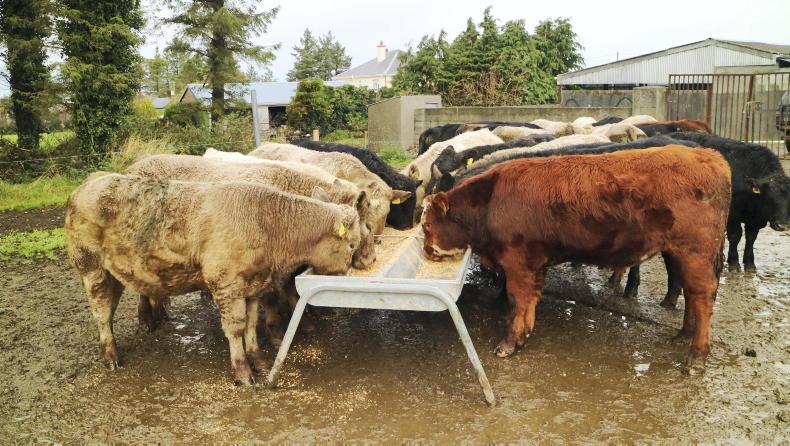
Minister for Agriculture Martin Heydon announced the opening of the 2026 Beef Welfare Scheme (BWS) on Wednesday and confirmed the payment rates and suite of actions available to farmers.
Payment in the scheme worth €28m is based on eligible calves with up to €75 payable on up to 45 calves, in return for completing three actions.
Calves deemed eligible are beef-bred calves born to beef dams between 1 July 2025 and 30 June 2026.
The scheme is open for applications immediately online via the MyAgfood.ie portal and will remain open for applications until 5pm on Wednesday 23 September.
It is important to note that there is no facility for late applications, with the Department outlining that this is the case to allow payments to commence in December 2026.
The Department has outlined at the outset that “in the event of the scheme being oversubscribed, the maximum number of animals eligible for payment or the rate payable per action may be reduced. A linear cut may be applied to one or more actions”.
This was the case in 2025 with a linear cut of €3 applied to action two – vaccination and a linear cut of €5 applied to action three – faecal testing/forage testing leaving the maximum payment on up to 45 calves at €67/head.
Actions included
The actions available to farmers have been known for some time and are similar to last year’s offering, with the addition of bluetongue vaccination and a few other tweaks to terms and conditions.
Action one is meal feeding and this is a mandatory action with a payment of €35 per eligible calf.
The maximum payment per herd is €1,575. Action two is optional and is vaccination and is worth up to €15 per eligible calf, or a maximum payment of €675 per herd.
There are three options available here – vaccination for pneumonia, clostridial disease or the bluetongue virus.
Action 3 is also optional and offers payment of up to €25 for faecal or forage testing.
The maximum payment here is €1,125, with an overall payment of up to €3,375 for herds with 45 eligible calves.
Action one: meal feeding
Participants must introduce meal feeding for a period of at least four weeks pre-weaning and two weeks post-weaning to reduce the stress on calves at weaning time.
Meal feeding must be carried out on the number of calves selected by an applicant (or their FAS advisor) at application stage.
A new addition to the terms and conditions includes the requirement for meal feed to be purchased between 14 October 2025 and 13 October 2026.
Participants must retain copies of all receipts of purchase and these must correspond to weaning records.
The terms and conditions add that “participants may feed purchased compound feed containing minerals and vitamins or straights (feed materials). If straights (feed materials) are being fed, participants should consult their advisor or nutritionist to ensure that a correct level of nutrition is being achieved.
Straights (feed materials) must be supplemented with suitable complementary mineral feeding stuffs”.
The recommended daily feeding allowance for meal feeding is 1kg per animal per day for a period of four weeks pre-weaning and 2kg per animal per day for two weeks post-weaning.
Action two: vaccination
The number of animals selected at application stage for payment for vaccination for bluetongue virus, clostridial disease or pneumonia vaccination cannot be greater than that selected for meal feeding, but it can be less. Participants will be required to complete a record showing the date of vaccination, number of animals vaccinated, and vaccination product used.
If vaccinations requiring more than one dose are used, then participants must provide proof that they have purchased sufficient product to fully dose each animal they have applied for. In addition, vaccination purchase receipts must be retained on-farm, available for inspection.
There is a new flexibility in this year’s scheme allowing participants to “choose to vaccinate either calves or cows, depending on what is most suitable for their herd once they are able to provide evidence of the required number of animals being vaccinated".
The terms and conditions state that sufficient vaccines for all animals selected for vaccination must be purchased between 14 October 2025 and 13 October 2026. However, it also states that calves can be vaccinated for pneumonia and clostridial disease from two weeks of age, so clarity is being sought on this aspect.
Action three: forage or faecal testing
Test kits for forage testing or faecal testing must be purchased between 14 October 2025 and 13 October 2026 and participants must retain copies of all receipts of purchase. For faecal testing participants can select which parasite they wish to test for using an appropriate method.
A new addition in 2026 is that you must carry out two faecal tests, as opposed to one test in 2025, with a minimum of four weeks between each test. The Department adds that participants should not select the optional faecal count action if they are also participating in the Parasite Control Consult programme under the Targeted Advisory Service on Animal Health (TASAH).
Forage testing requirements are pretty straightforward – three forage samples must be submitted to a suitable laboratory/testing facility of the farmer’s choosing.



SHARING OPTIONS