
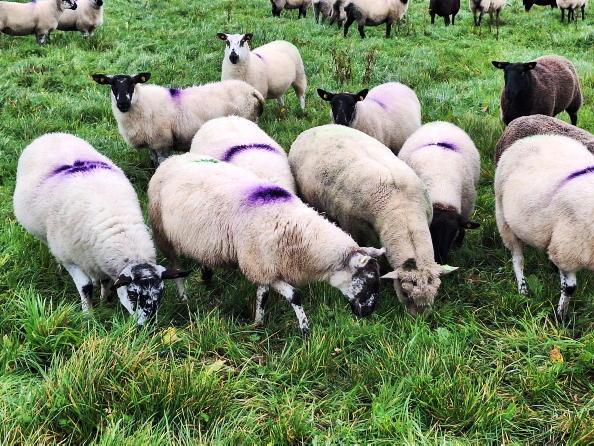
Breeding ewe lambs: Ewe lambs joined with the ram should weigh a minimum of 60% of mature weight at time of joining.
Achieving this weight target will fast track ewes entering polyestrous and influence subsequent conception rates.
It is important to note that the effect of this reduces as the year progresses with ewe lambs cycling at much lighter weight.
At this stage ewe lambs should be separated from ram lambs and potentially all male lambs unless you are sure castration has been successful. Significant numbers of ewe lambs turn up each year in lamb unplanned.
The optimum management of ewe lambs joined to rams in early pregnancy is to avoid under- or over-feeding with a compromise of lambs gaining in the region of 0.5kg per week.
Access to good-quality grass is sufficient to drive this level of weight gain. The other major factor that has an influence on lamb output is using proven easy lambing breeds.
Winter ready: This week’s Focus is on being winter ready. Some farmers in the east and midlands hit hardest by drought are still facing the prospect of earlier housing. If this is the case then it is worth assessing straw supplies.
Lowland ewes will typically require 7kg straw bedding per week to absorb all urine while hill ewes have a lower requirement of 4kg to 5kg straw per week.
As a rule of thumb one 4x4 round bale weighing 140kg will be sufficient to bed 18 to 20 lowland ewes per week or 30 to 35 hill ewes.
This generally applies to ewes fed silage and the requirement may be reduced by 20% to 30% for ewes fed hay or high dry matter haylage.
Applying straw with a straw blower will also reduce the level of usage. Remember to include about four to five bales for every 100 ewes for lambing pens where there is a 24- to 36-hour turnaround in individual pens.
Other tasks include checking feeding barriers, dividing gates etc for any wear and tear and water troughs to ensure water is flowing adequately and there is no leaks.
Think back to recent housing periods and lambing and review if there is anything that can be done to reduce the labour input required. And remember to check antifreeze levels in vehicles as temperatures drop.
Organic feeds: A significant challenge for organic producers in finishing lambs from this stage of the year onwards is the higher cost of organic concentrates.
The other and possibly more significant challenge for many is that at least 60% of the diet must comprise of roughage/forage source which makes it harder to finish lambs.
This increases the importance of the concentrate component of the diet being of excellent quality. High-energy cereals such as barley, wheat, oats should be high up on the list of ingredients with low-energy feeds towards the bottom and ideally not included.
The Organic Trading Hub, organictradinghub.ie, is a good resource for farmers to source home grown rations or forage.
Barriers such as small volumes being ordered and geographical location can in some cases be overcome by linking up with other organic producers.
The Organic Beef and Lamb Innovation Group may be able to help in this regard. The group was set up to reduce leakage of organic produce to conventional systems and can be contacted at info@oblig.ie or see www.oblig.ie for more.