



Donald Logue
Muff, Co Donegal
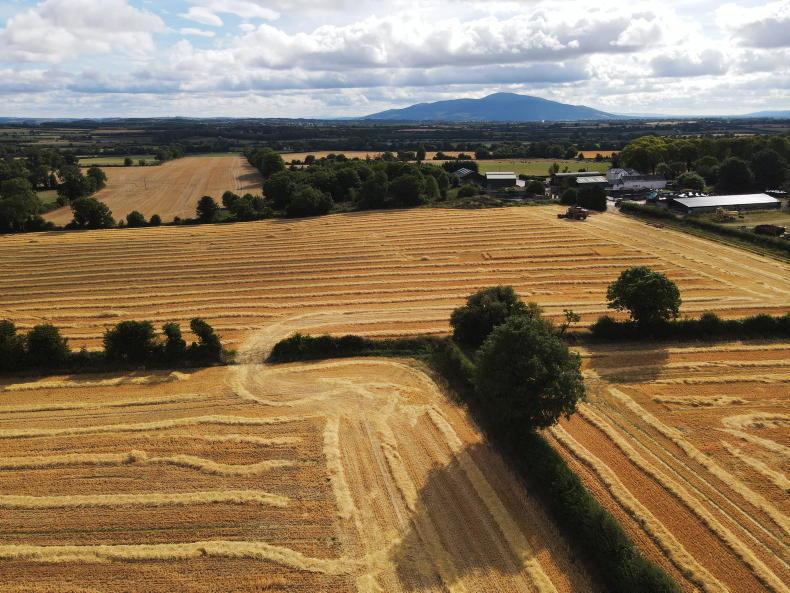
There’s been a “right bit of rain” in Donegal over the past number of weeks. Very heavy thundershowers have been soaked up straight away by the soil, according to Donald and growth has returned in fine fashion.
Happily, Donald got his organic winter oats cut before this rain arrived, and there were great harvesting conditions, a rarity in his part of the world.
The crop yielded 1.8t/ac which he was happy with for the year that was in it. This was at moisture contents down to 14%.
He says the grains were not very big this year, but there were plenty of them.
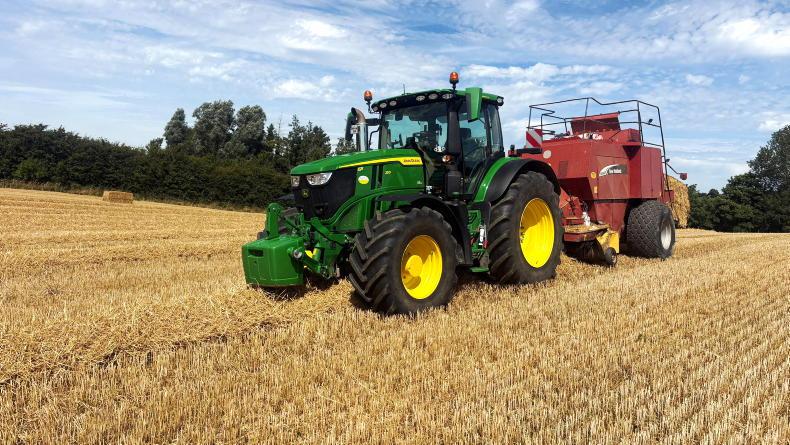
The only thing that disappointed Donald was the volume of straw. It was on the light side, but the straw that was there was baled up in great conditions.
After the fields were cleared, Donald planted a cover crop of oats (20kg/ha), vetch (12kg/ha), and two types of clover (5kg/ha). With the moisture that is now in the soil, this should have plenty of time to grow a large biomass.
The mixed crop of barley, oats and peas looks very well and is another two or three weeks away from harvest. Donald says that even a few poor areas earlier in the year have improved a lot. The crop has survived some very heavy thundershowers, with only a couple of very small areas lodged.
Great new pea variety
Donald adds that the barley grains seem to be very big and the new pea variety, Ingrid, has done a great job of standing so far.
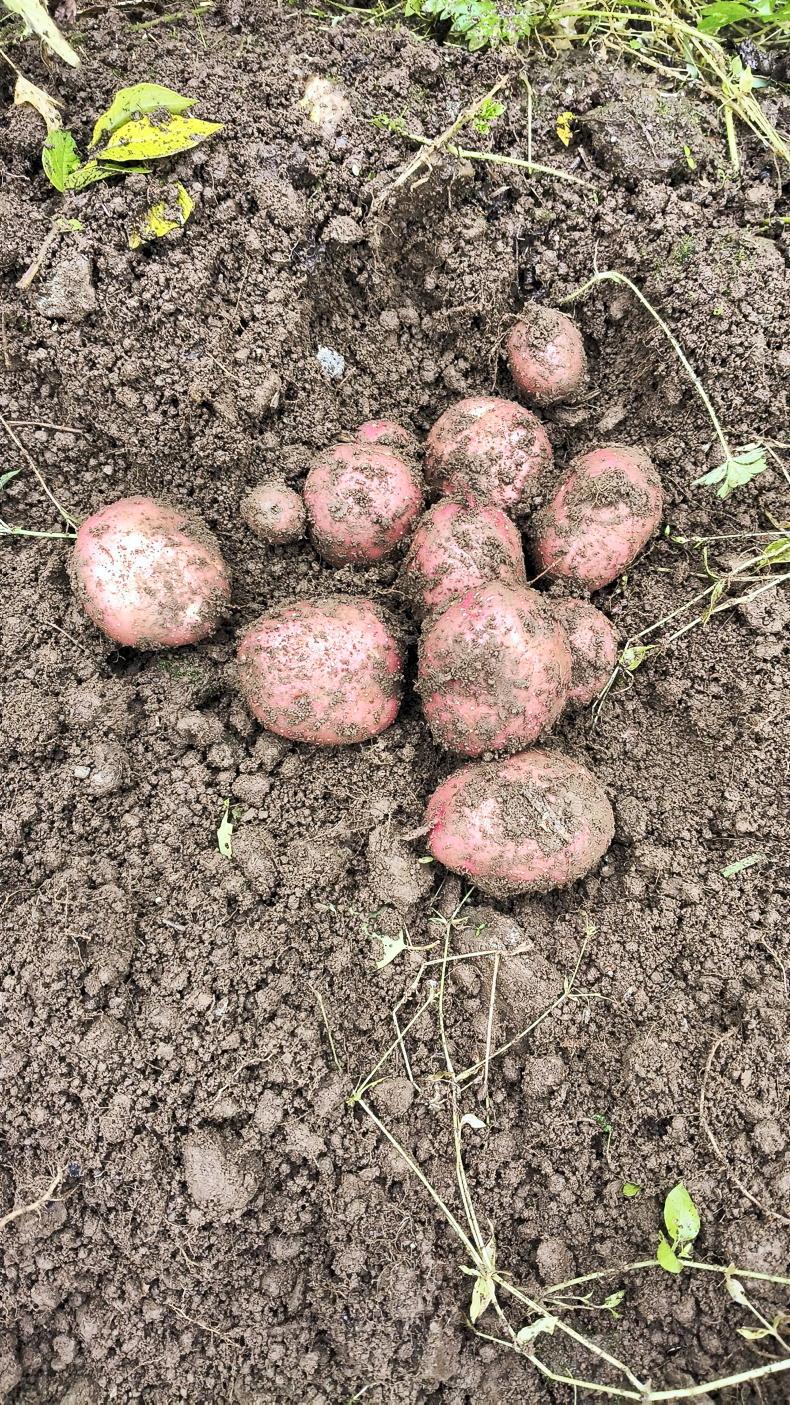
The potatoes’ growth has slowed down due to the dry weather before the rain returned. Donald says he cannot do much for them as he is limited by the organic system in how he can feed the crop, and so he has no big hopes for the yield.
Donald explains that there are a normal amount of tubers on each plant, but they are quite small, and it is the tuber size that is critical in an organic system.
Nicholas Ryan
Clonmel, Co Tipperary
Nicholas has finished his harvest in Tipperary. He says that yields were fine overall but there was an obvious yield penalty due to the heat and drought.
The spring barley yielded 2.6t/ac at 15% moisture and 63 KPH. Nicholas says this was disappointing.
This is the worst yield the farm has had in recent years, and to make it worse, most of it did not make malting spec either.
Nicholas believes it’s mostly down to the short growing season of 16 weeks. The barley was planted two weeks late due to the wet spring, and harvested two weeks earlier than normal as the crop burned in during the drought.
The winter wheat yielded about 4t/ac at 16.5% moisture and 71 KPH, while the winter rye was a bit lower, yielding 3.8t/ac. Nicholas was happy with the rye and says it gave a strong straw yield.
Preparations have now begun for the 2027 harvest through the discing of ground ahead of drilling winter oilseed rape. Nicholas admits that this cultivation is not ideal in the dry weather, but he needed to get it done.
Pig slurry will be applied to the ground before planting. Nicholas thinks it is essential when growing oilseed rape due to the many benefits it can bring, including the building of a large LAI early in the season.
Aurelia is the chosen variety, and Nicholas hopes to plant 24ac of the crop at the end of August.
On the Golden Vale Research side of the farm, all spring barley trial plots have now been harvested.
The grain from a DAFM heritage wheat and barley trial will be tested by bakers before a public blind taste test at the National Ploughing Championships next month, to see whether people prefer the taste of heritage or conventional grain bread.
Michael Martin
Rathnure, Co Wexford
After disappointing winter cereal yields, the spring barley provided a more positive finish to the cereal growing season for Michael in Wexford.
“The spring barley definitely performed better than the winter crops,” he explained.
“Yields generally ranged from 2.9 to 3.5t/ac, with moisture levels almost perfect at around 15 to 16%.”
Florence was the standout spring barley variety, performing consistently across a range of soil types.
Straw yields were another positive, with many fields averaging 10 round bales/ac.
When it comes to discussing yields, however, Michael believes a little caution is sometimes needed.
“You always hear plenty about the famous 3.5t/ac crop at harvest time,” he noted. “From what I’m hearing, a more realistic average for a lot of crops is somewhere around the three-tonne mark.”
The spring oats also yielded well, although the challenge there is less about growing a decent crop and more about finding a worthwhile home for them this year.
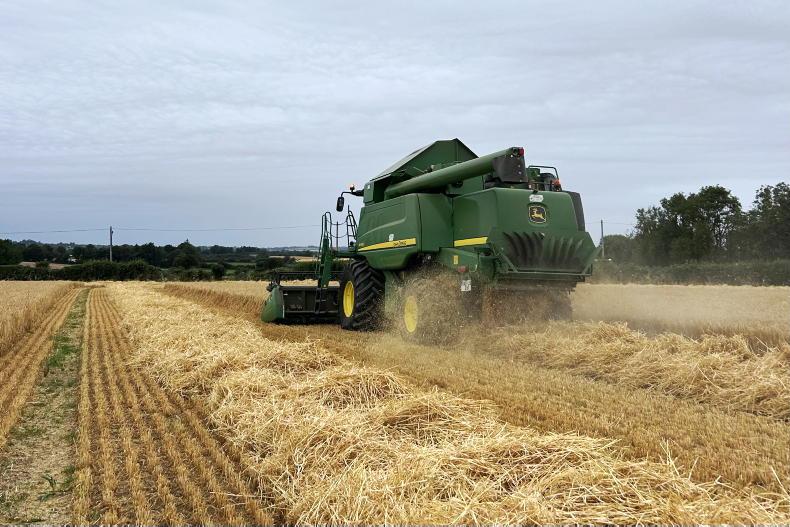
“The oats did their job in the field,” he said. “The concern now is the limited market options and poor price for feed oats at present.”
Away from the combine, the lack of rainfall has become the main concern. Fodder beet is suffering badly from drought stress and has been noticeably stunted. The crop recently received boron, manganese, a fungicide and an aphicide, which has helped improve its colour and encouraged some fresh growth. The farm’s spring beans were sown in a heavier clay-type soil this year and, as a result, are doing really well. Michael anticipates a harvest date in the coming weeks.
“We recorded only about 1.5mm of rain in July and less than 6mm so far in August,” he said. “You can really see the consequences now.
“Grass growth has practically stopped, beet development has been badly affected and even the maize is beginning to look for moisture,” Michael added.



SHARING OPTIONS