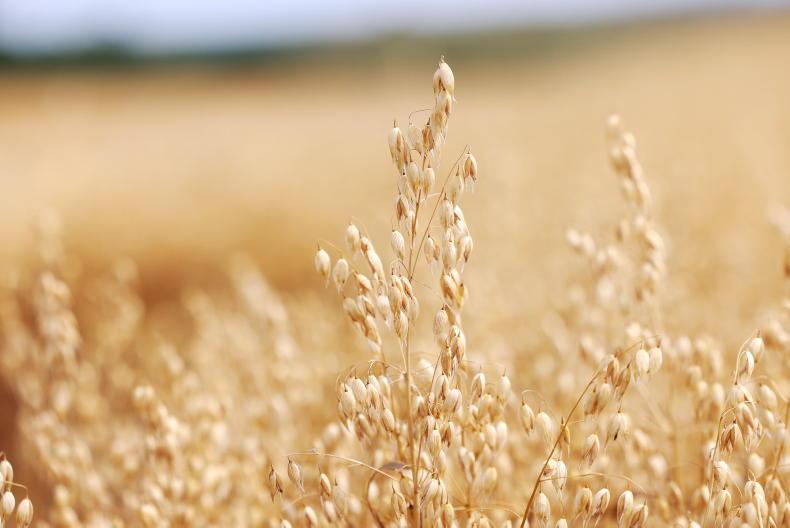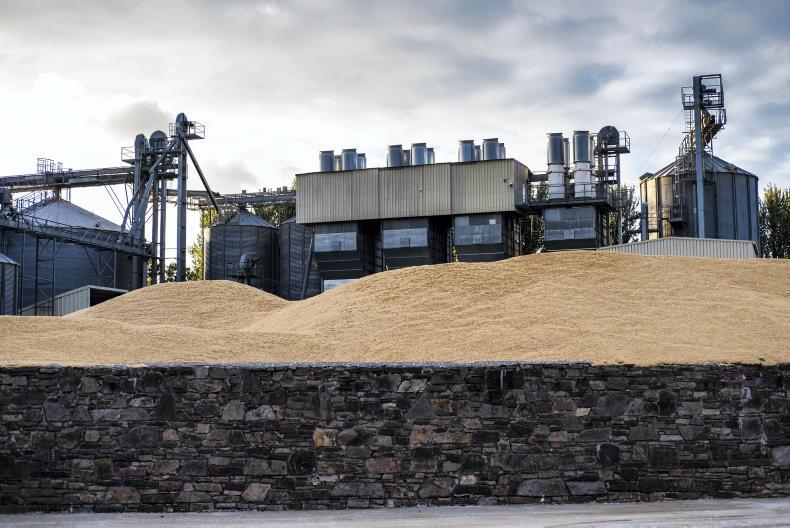

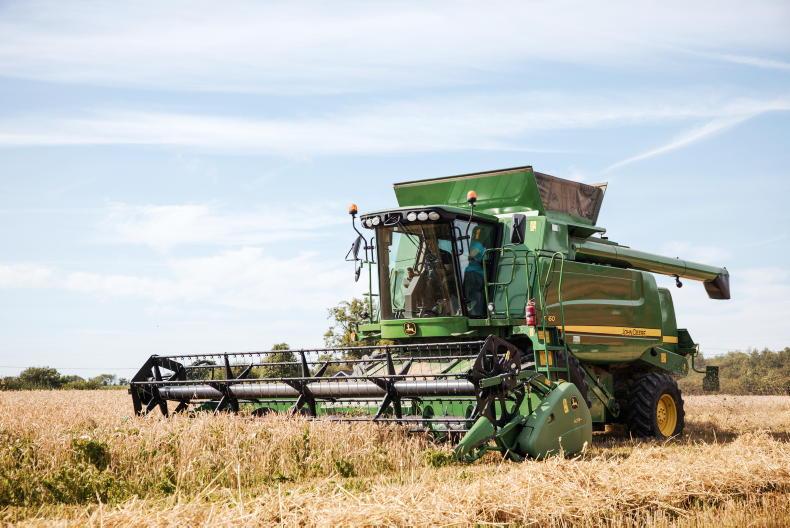
There has been a decrease of 11% in cereal production this year, according to the Teagasc Harvest Report 2026, released on Tuesday.
This leaves national cereal production at 1.997 million tonnes, down from 2.162 million tonnes in 2025. This is below the five-year average of 2.162 million tonnes.
This is a similar level to the Irish Farmers Journal estimate of total cereal production for 2026, which was 1.99 million tonnes at average moisture contents and 2.1 million tonnes at 20% moisture.
The winter wheat average yield was over 1t/ha (0.4t/ac) lower than in 2025, contributing to a fall of 100,900t in the amount of winter wheat produced.
Winter oats saw a reduction in production of 36%, mostly due to the large drop in acreage. Spring oats told a similar story, down 27%.
Spring beans had an average yield of 3.95t/ha, well below the five-year average of 5.2t/ha.
The report highlights that many spring bean crops yielded below 2t/ha (0.8t/ac) due to the effects of drought.
The only crop to see an average yield above the five-year average was winter oilseed rape, coming in at 5.1t/ha.
The report notes that harvest grain moisture was below average, particularly for barley. Therefore, this can have an impact on the yields in the report.
Straw yields were also reported to be 20% to 50% lower than normal in many areas, while there were significant quantities of spring barley straw still to be saved in the northwest in mid-October.
Weather effects
The weather had a huge impact on crops this year. The report says that some areas were affected more than others, with the southeast and south midlands seeing the greatest reduction in yield due to the excessive temperatures and lack of rainfall.
The report notes that not all lower yields were because of the drought, with BYDV and diseases such as yellow rust and take-all also playing a role in some areas.
However, the effects of the weather are seen in winter wheat yields, which were as low as 6.6t/ha in the midlands and southeast and as high as 12t/ha in the northeast.
The wide variation is also seen in spring barley yields, from below 7t/ac to 11t/ha, with yields as low as 2.25t/ha seen in areas worst hit by the drought.
Last week, ahead of the release of the harvest report, Teagasc tillage specialist Ciarán Collins told attendees of Tillage Day that compiling the report highlighted variable spring barley yields, with the drought playing a huge role this year.
“The yields in the south were definitely quite good, a lot of three tonnes,” he said. However, when it came to the midland areas of Carlow, Kilkenny, Laois and south Kildare, Ciarán noted that there were “much poorer yields, certainly affected by the big soil moisture deficit".
“In the northeast, yields were a little bit better again, maybe reflecting the soil type that suited the year,” he said.