
One of the main messages coming out of the Teagasc Agricultural Catchments Programme (ACP) is that “the nutrient concentration in the water is not reflective of the intensity of farming practice that is taking place in the area,” according to Eddie Burgess, agricultural catchment specialist with Teagasc.
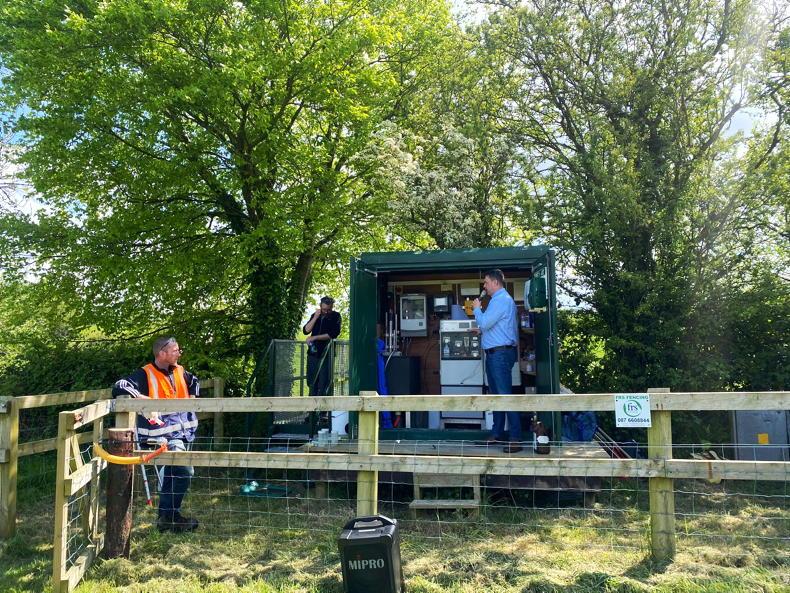
He was speaking at a visit by the catchment implementation groups for the River Nore and River Barrow to the Ballycanew and Castledockrell water monitoring sites in Co Wexford.
“The inherent nature of catchments is that no two catchments are identical,” he said.
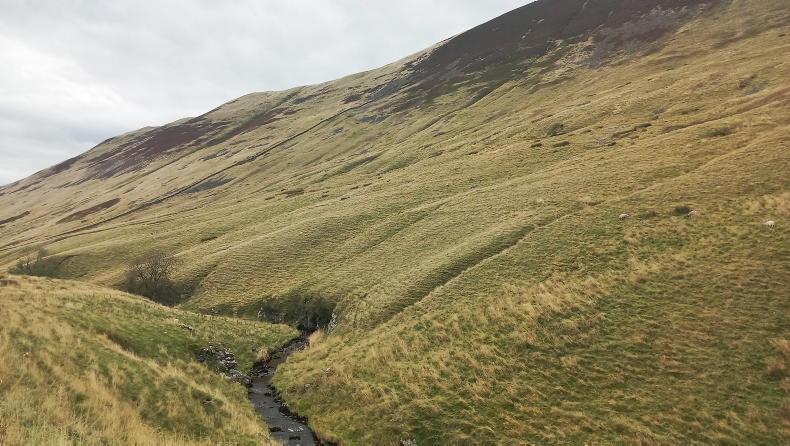
“They don’t have the same slope, topology, weather, hedgerows, geology, buffer strips or farming practices.
“All of these have an influence on the nutrients that end up leaving the catchment.”
While some of these aspects are outside a farmer’s control, they still have a huge role to play in reducing nutrient leaching and improving water quality.
“If you don’t see a result in the next year, if things stay the same, that doesn’t mean what you did wasn’t beneficial,” Eddie explained.
Soil type
Soil type can have a huge effect on the level and type of leaching. Light, free-draining soils do not tend to have much surface runoff or phosphorus pollution as water can usually percolate down through the soil.
However, nitrogen will move with this water and leach out of the soil.
Heavy poorly-drained soils are more likely to be at risk from surface runoff. Water finds it more difficult to infiltrate the soil and therefore runs straight off the surface, often carrying soil and phosphorus with it.
These soils tend to have a high clay content and therefore are more likely to become anaerobic. Eddie explained that warm anaerobic soils are favourable for bacteria that will denitrify the nitrate that is in soil water, thus reducing the concentration of nitrogen leached from these soils.
How leaching occurs
There are two things that must happen in order for nitrate leaching to occur, according to Eddie: there must be surplus nitrogen in the soil above crop requirements and water must be percolating down through the soil profile.
“If the soil has capacity to soak, or if evapotranspiration rates are higher than rainfall, there is no leaching of water taking place,” he said. If there is no water leaching through the soil, there is no nitrogen leaching.
Therefore, very little nitrogen is leached during the summer months as drier soils greatly reduce the level of water leaching from the soil. There could be much more nitrogen than is required by the crop but it will just sit there.
In fact, most of the water in watercourses during very dry times is usually very old water. “If the fields are bone dry and all the water flowing into the catchment is flowing out of a deep groundwater-fed spring, the water is very old,” Eddie explained.
Some of the water in our streams and rivers fell as rain up to 50 years ago and it has taken that length of time for it to get to the watercourse, giving nitrogen plenty of time to be removed from the water through different methods.
However, if the excess nitrogen is not used by a crop and the water table starts to rise, water that begins to move through the soil to the watercourses will take the excess nitrogen with it.
Therefore, a watercourse’s “recharge period”, where the level of water in it is increasing, typically over the autumn and winter months, is a critical period for nitrogen leaching.
Will the drought affect water quality this winter?
After the drought in 2018, the level of nitrates in watercourses showed a large increase over the following winter months.
However, a lot of nitrogen was spread during and after that drought on grassland, much more than the grass’s requirements.
This year, less chemical nitrogen has been spread on grassland and it was only applied once rainfall and growth had returned.
While the drought did persist until the end of August this time, the high soil temperatures, sunshine levels and growth in September and October should help to use up some of the nitrogen that was either applied or mineralised in the dry soil.
Eddie commented that we will see a spike in nitrogen in watercourses over the winter months and it will likely be higher than normal due to the summer drought. However, he is cautiously optimistic that the spike will be lower than what was seen in 2018.
‘Pulses’ of phosphorus
Phosphorus (P) pollution is heavily affected by rainfall events. It runs off the surface of the land “in pulses”.
As reported at the time, nearly two years’ worth of P was lost in Castledockrell over the space of 12 hours after very intensive rain in May 2024. Eddie explained that a wet spring meant that crops were planted late and there was a lot of bare soil.
This meant there was no vegetation to soak up water or slow it down as it ran off the surface.
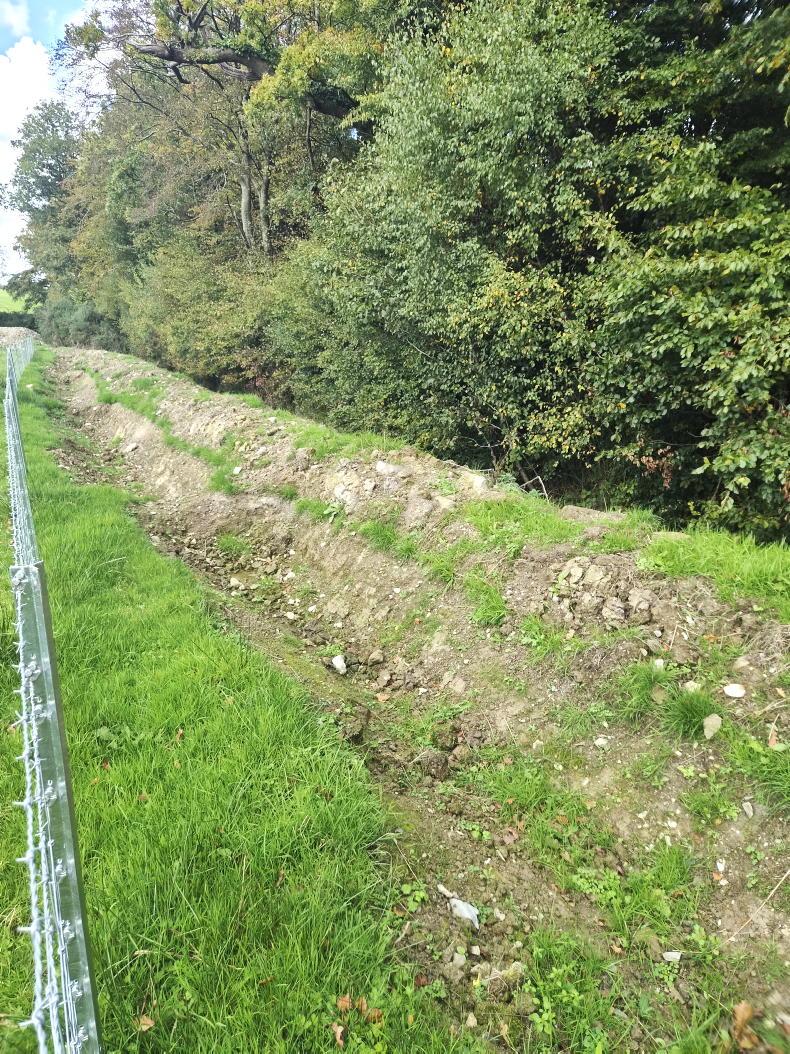
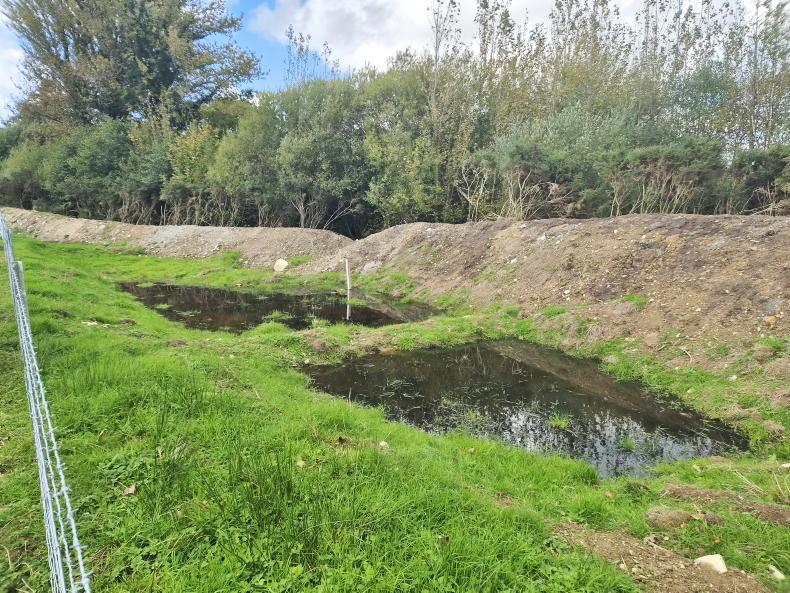
To combat surface runoff, a number of measures can be taken such as cover cropping, buffer strips, sediment ponds, and planting trees or hedging along waterways.
The main aim is to slow down the speed that the water is travelling through a catchment at.
While these heavy rainfall events cause much of the P pollution, the inappropriate use of organic manures, especially where soil P levels are already high, also causes P losses.
What can farmers do?
Eoghan O’Brien of Teagasc demonstrated some of the actions being taken by farmers under the Farming for Water EIP during this visit. The following measures were having a high-impact at a reasonable cost: