



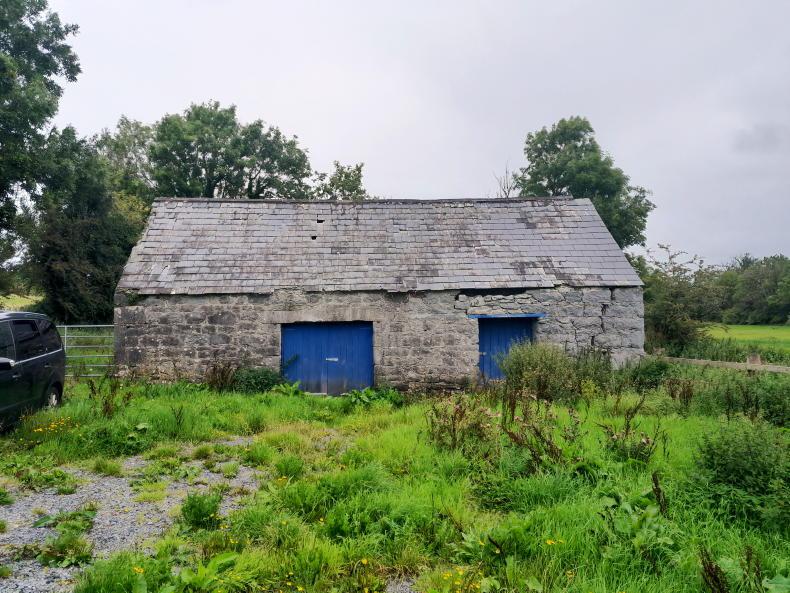
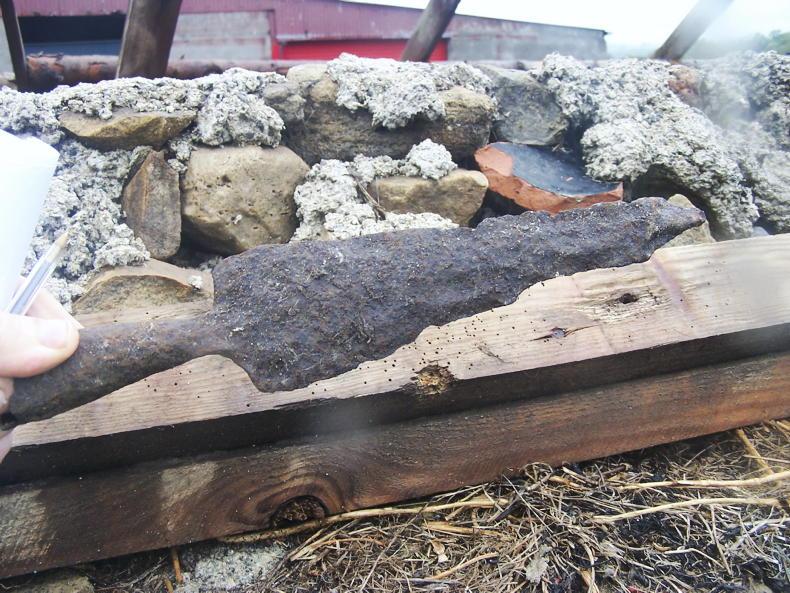
Pike heads from the 1798 Rebellion, receipts made out to Seán Lemass, letters and papers from the 1922 Civil War and guns and bullets are some of the many things found in buildings restored under the Traditional Farm Buildings Scheme.
The scheme is aimed at encouraging farmers to put a cultural value on their buildings and helps them to bring the buildings back to use, but the benefits of the scheme go far beyond the farmyard.
The scheme supports farm buildings and related structures such as farm bridges, walls, cobbled yard surfaces, millraces, gate pillars, gates, dung steads, stables, barns, hen houses, granaries and old dwellings that have been converted into sheds.
“I find it ever interesting because it started out supporting traditional farm buildings, because of their contribution to the landscape, but there’s so much more that has come out of it,” Anna Meenan, the programme manager of the Heritage Council’s Traditional Farm Buildings Scheme said.
“If these buildings had been bulldozed, these artefacts and history would be lost forever.
“Guns of all types, bullets, weapons are probably the most common find ... you can imagine the hiding places needed and traditional farm buildings were a good place for that.
“Wall plates are not just good for rat runs - they made for a wonderful hiding spot, and roof repairs are amongst the most common repairs carried out,” she told the Irish Farmers Journal.
Republican prisoners and Civil War
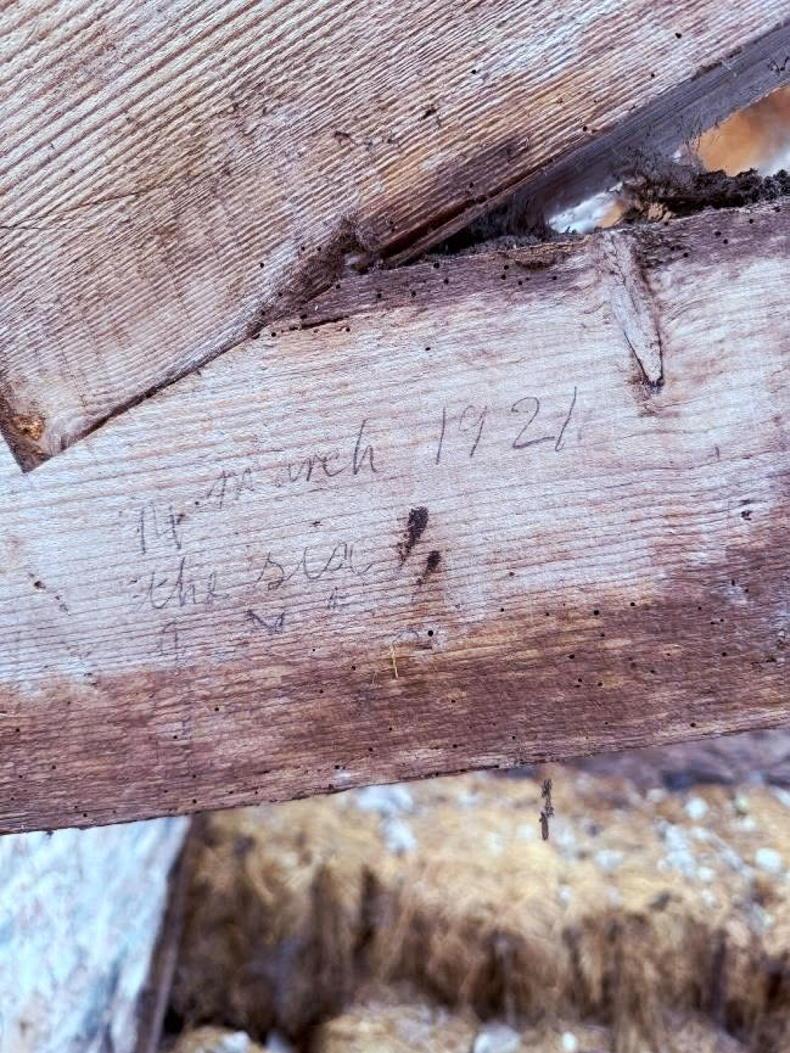
One of the most interesting finds was in a 19th century Clare stable which was having its timber roof repaired, where a farmer uncovered the inscription: “14th March 1921. The six republican prisoners were shot this morning.”
The message, written over a century ago, refers to six of the “Forgotten Ten” Irish men executed in Mountjoy Prison during the War of Independence. Though slightly inaccurate (the men were hanged, not shot), it captures a moment in time when news travelled slowly and emotions ran deep.
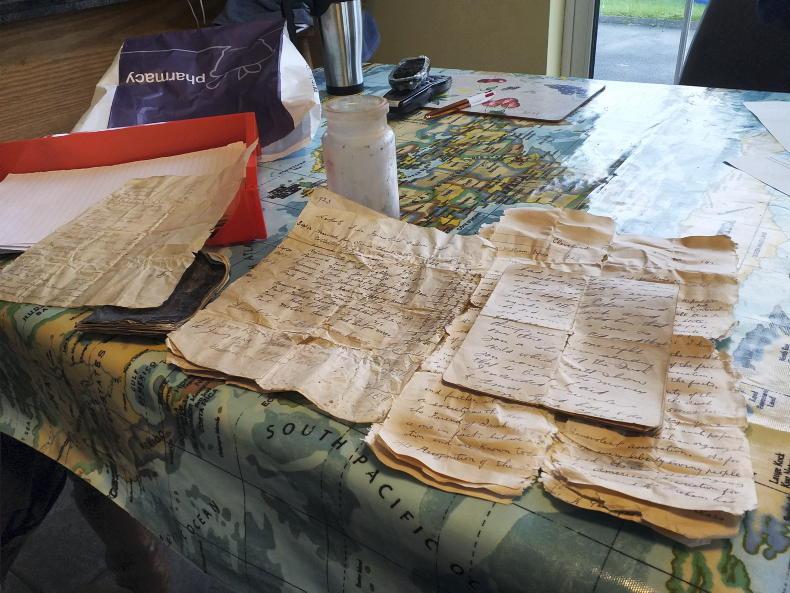
Another noteworthy discovery was during conservation repairs of the gable wall of a Mayo farm building where, behind two sets of stones, a stack of 100-year-old letters and papers on the 1922 Irish Civil War were revealed in an upturned jam jar.
In addition to this, letters from relatives in Cleveland –where many west Mayo emigrated to in the 19th and early 20th centuries – were found, which have since been exhibited in Columbus, Ohio.
A receipt made out to Seán Lemass, who would go on to become Taoiseach, for giving a talk in Newport, was also uncovered.
“On this site, each stone had to be removed by hand. Had the structure been erased by a bulldozer, the family and community lore would have been lost,” Meenan said.
Another interesting project in Galway saw the conservation of a cow byre, which now serves as a sheep shed, from where, as young boys, the father and uncle of the current farmer delivered milk from their cows to W.B. Yeats residing in Thoor Ballylee near Gort, 20 yards further up the road.
“I’ll never forget a photo I got back in 2020 on the project on Laois of a pike head from 1798. Two of them were found hidden in the wall plate, which got interest from the National Museum.
“If it wasn’t under the scheme, they’d likely never be found,” Meenan remarked.
Pride
“I can’t tell you how much joy people get out of being involved in the projects,” Meenan added.
“We support farmers to do the work themselves. Around 40% of projects have some own labour input, while another 15% are entirely carried out by the farmer.”
A 2022 Department of Agriculture evaluation of previous scheme grantees found that 100% of respondents said they felt their farm looked better and they were prouder of it.
“The amount of people who’ve been learning and upskilling for their repairs is great. Slating, lime work, roof timber repairs, cobbling and blacksmiths. These are different skills that people who’ve never used them have developed, while others have upskilled.”
Works are carried out in a manner that does not upset existing wildlife populations, while also increasing the buildings and their surroundings’ habitat potential, Meenan highlighted.
Ecologists and botanists work with conservation supervisors, builders, and farmers to achieve a holistic heritage outcome.
“As part of the application process, the owner must make a statement of what they see as the heritage value of the building, which is really important.”
The 2022 evaluation also found that 96% of the buildings supported are in agricultural use, showing that the scheme is proving successful in achieving one of its primary aims - to give these traditional buildings a purpose and be part of the normal working life of the farm.
From a conservation point of view, their continued use (for farming as well as wildlife) is key to ensuring their ongoing maintenance and survival into the future.
“We need them to be considered as a useful resource rather than as a burden,” Meenan said.
Grants
The scheme is open to farmers participating in and accepted into either Agri-Climate Rural Environment Scheme (ACRES) or approved applicants of the Organic Farming Scheme (OFS).
They must also be the owner of the building or other related structure for which funding is sought or be acting with the permission of the owner.
In 2025, there were 259 applications submitted to this scheme of which 70 were approved. Of these, 55 were in ACRES, seven were in the OFS and eight were in both.
The budget allocated to the scheme in 2025 was €1.5 million with actual expenditure in 2025 of €1,239,362 and the average amount paid out per applicant was €17,705.17, the Department of Agriculture said.
The top five most popular items applied for restoration under the scheme were as follows:
Top five works/repairs
Top five buildings/other related structures
Budget
The budget allocated to the scheme for 2026 is €750,000.
Up to the end of 2025, the scheme was co-funded by the Department of Agriculture and the EU.
In 2026, it is funded under state aid mechanisms. The scheme is included in the Programme for Government.
“The scheme has secured the future of over 1,000 traditional farm buildings.
“Buildings that have been standing since the 1840s. They are nearly 190 years old.
“This year, the scheme has been funded under state aid rules and we will be very keen that the scheme will continue,” Meenan concluded.



SHARING OPTIONS