
The damning statistics on health and safety on farms will struggle to improve unless farmers, and anyone working on a farm, change their mindset and embrace health and safety as part of their daily routine.
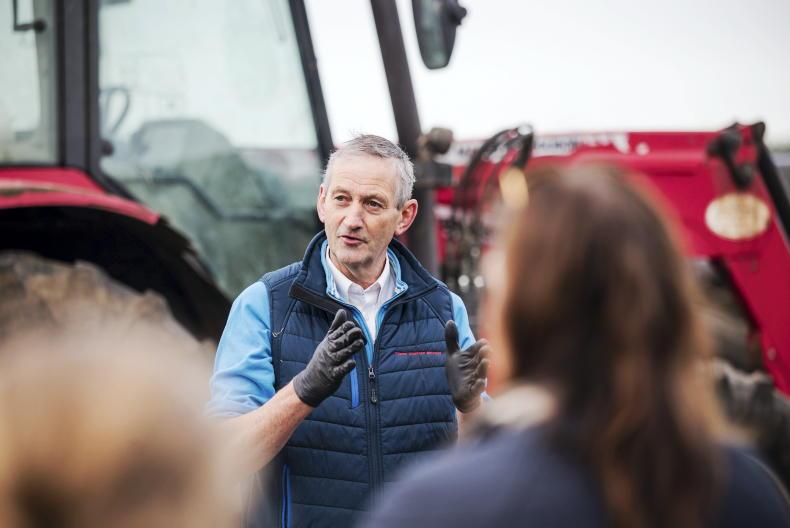
This advice was delivered by Jim Dockery, of Towra Livestock Training Services at the recent farm safety event held on Tullamore Farm, supported by the Department of Agriculture, Food and the Marine.
Jim told farmers in attendance that health and safety checks and considerations need to become part and parcel of everyday farming activities rather than being seen as an onerous task.
He used tractor safety as an example and highlighted how small changes can majorly reduce the risk of accidents.
He encouraged farmers to build pre-start checks such as checking their tractor for oil (engine and transmission oil), wear and tear on tyres, hydraulic hoses etc into a quick task that becomes the norm to complete daily.
Tractor grip on tyres and working lights are of particular importance with darker mornings and evenings and pressure on to get work completed in daylight hours.
He encouraged farmers to master three points of contact when entering and leaving a tractor and to use climbing steps one by one and to ensure hand rails are also utilised. In older tractors, steps should be replaced where the grip has become worn or slippery.
Optimum visibility
The cab floor should be kept clear of equipment and items such as empty drinks bottles and other containers that could roll beneath the pedals and impede the driver’s ability to react quickly.
He said every farmer should ask themselves if they have enough lights on the tractor or around the yard to work safely in the dark. Would a spot light on the tractor improve visibility if unloading bales or working with a shear grab on a silage pit. Or would an extra light in a yard where visibility is poor when walking between sheds etc reduce the risk of trips?
Jim encouraged farmers to always think about possible safety dangers if someone else comes onto the yard. He advised against parking on sloping ground, where a tractor could roll if its handbrake was released, potentially causing serious injury, while the loader should always be lowered when the tractor is not in use.
Training and TAMS grant aid
The importance of adequate training also came up and, in particular, where tractors are being driven by someone new coming on to the farm or when a new tractor is purchased. In such instances it is critical to become accustomed to the controls.
The Targeted Agricultural Modernisation Scheme Farm Safety Capital Investment Scheme was raised as an excellent opportunity to make positive changes. This applies to yard lighting, handling of livestock and much more with grant aid of 60% available.