
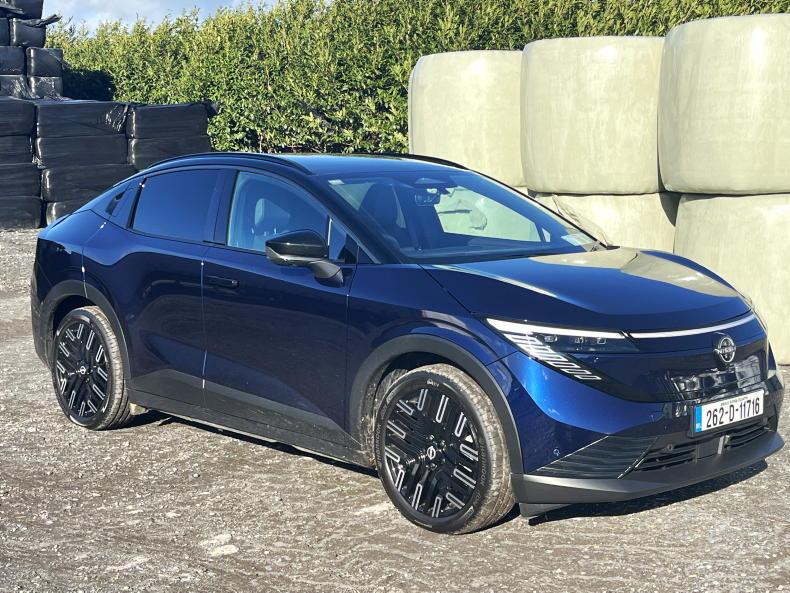
Nissan has morphed the Leaf all-electric car from being a hatchback to a crossover with the recent Irish launch of the third generation of the model. Nissan’s Leaf was the first reasonably affordable and reliable mass-produced electric car on the Irish market when introduced in 2012. Things have moved on a lot since then.
The electric car market is now flooded with a host of new entrants. These include new brands and a selection of models from new-generation Chinese makes with names unheard of 15 years ago. So how does the new Leaf compare with the car that it recently replaced and where does that leave the Leaf in terms of competition?
With that experience behind it, Nissan knew that the 2026 Leaf needed to offer longer range, better range at motorway speeds, faster charging speeds, new technology features and a more spacious interior. The new Leaf has achieved most if not all of that.
Compared with the previous Leaf, the claimed driving range from a fully charged battery has nearly doubled to over 620km and Nissan claims that for motorway drivers at 120km/h, the range will be an impressive 370km. That latter claim was confirmed during my recent driving experience and the ability to recover power at speed on a motorway fast charger is also evident.
This new Leaf, while heavier than the previous model, is more efficient in terms of electric power consumption, even though it is marginally slower at acceleration. What I liked was the driving mode options where the Eco setting once chosen remained the choice without having to reset for each journey, like some of the competition.
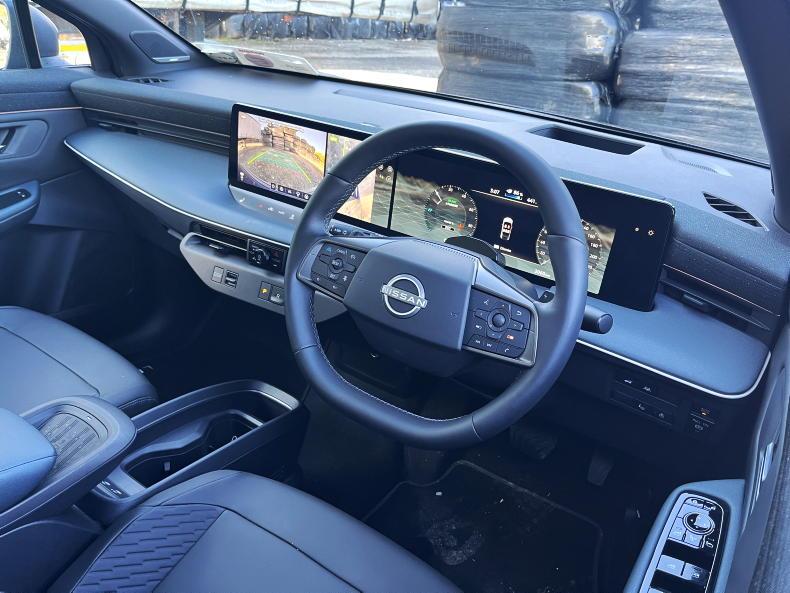
Nissan’s e-Pedal driving option also helps to manage battery power to enhance the range. This, along with the driving mode button, is clearly identified in the centre of the dash area and tactile rather than touchscreen.
Heating controls are touch dash rather than touchscreen, while there is a choice of radio volume control from the steering wheel or a central rotary dial. There is a good feel to the multi-function steering wheel.
The transmission control is button operated and Nissan has given a slightly raised feel to the reverse button option, so that its use becomes more instinctive and these are among the features of the new Leaf that I liked.
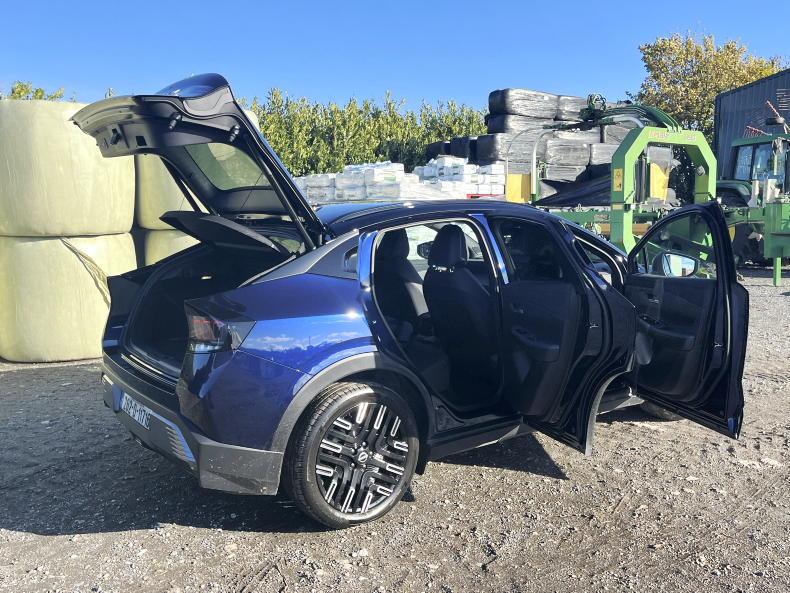
Nissan claims a more spacious interior and the new Leaf feels so with its higher roofline. The boot space is only marginally bigger and when the rear seats of this hatchback are folded, the space is actually smaller in volume terms than before.
This new Leaf is also marginally shorter in length than the old model. For this Leaf, Nissan is confidently offering a removable tow-bar and fully electric towing kit as an option with a towing rating of 975kg with a braked trailer.
This latest generation Leaf has more technology including NissanConnect with Google built-in for Google Maps with In Car Route Planner, Google Assistant for hands-free control over navigation, media, climate and more, and Google Play for apps, streaming and productivity tools. In truth, the car can almost drive itself. While this new Leaf has a host of new advanced safety and driver assistance features, it has not achieved a Euro NCAP safety rating just yet.
This new Leaf is a proper grown-up electric car that’s comfortable, spacious and quiet to drive. It comes with a 3 star EV Database rating out of a maximum of 5 for its range and performance, that’s an increase from the 1.5 star rating for the previous generation model. Entry prices for the Leaf start at €39,995 or £32,249 in Northern Ireland, which is marginally cheaper than the previous model. A smaller 52kWh battery version is also available for about €3,000 less, after SEAI grant support.
It is important to point out that Nissan appeared to discount heavily the last models of the previous generation, so these list prices may not accurately reflect the actual value up to now.
Nissan has learnt from the experience of two previous Leaf generations. This car is modern and stylish, while being a bit more compact on the outside with a higher ceiling to feel more spacious on the inside. Nissan’s electric car experience also counts for some value, especially when some brands are on a steep learning curve when it comes to electric car after-sales servicing.
Fifty-one cars vying for 2027 Irish Car of the Year title
Fifty-one new car models are in the running for the 2027 Irish Car of the Year Awards organised by the Motoring Media Association of Ireland (MMAI). This year there is a mix of electric vehicles dominating the shortlist, from smaller, compact EVs to premium models all seeking the coveted 2027 title.
The Irish Car of the Year Awards as voted on by 30 jurors representing much of Ireland’s motoring media, is the longest-running event of its kind in Ireland, having originated in 1979 when the first-generation Volkswagen Golf took the crown. In the decades since, and with the continuous technological evolution in design, batteries and safety aids, the Irish Car of the Year Awards help to highlight the best vehicles on sale in Ireland today, enabling Irish motoring consumers to make an informed decision when making an investment in a new car.
Last year’s Irish Car of the Year winner was the Renault 5 E-Tech Electric, the second EV to win the title since 2025, continuing a strong run for EVs in the competition.
With over 10 categories ranging from small cars to family SUVs and high-performance vehicles, I have a lot of homework to do over the next week. The 2027 awards ceremony will take place on 12 November.