



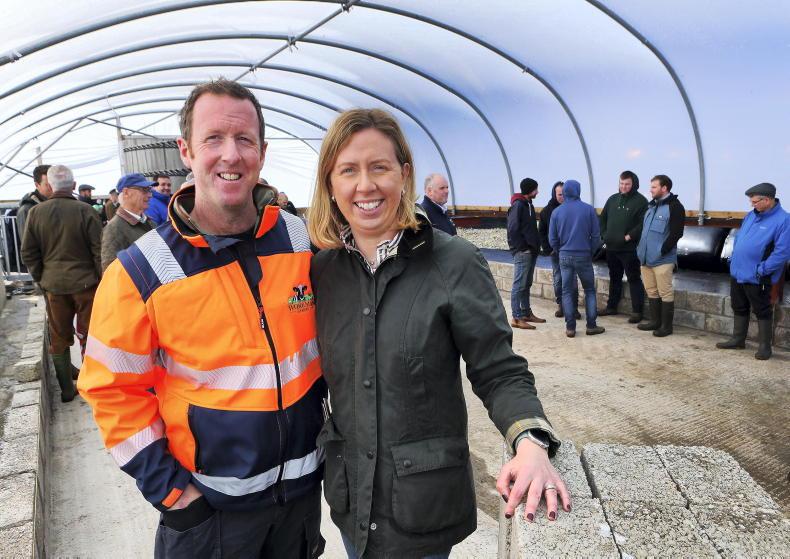
There is a strong focus on achieving high levels of animal health and welfare at Workman Farms Ltd in Aghadowey, Co Derry.
The dairy farm is run by Matthew and Helen Workman, with 220 Holstein Friesian cows going through the parlour at present.
The Workmans are one of four dairy farms in NI that supply liquid milk to retail chain Marks & Spencer.
While milk is collected through Lakeland Dairies, the M&S suppliers are on a different milk pricing model and have to meet additional quality assurance standards.
An example is the recent installation of a Cattle Eye camera at the exit to the milking parlour in September 2026.
The camera uses artificial intelligence (AI) technology to monitor the body condition and mobility of each cow in the herd.
Matthew said he is hopeful that it will allow lameness to be detected at a much earlier stage, so cows can be treated before they become visibly lame.
In the cubicle shed, another AI system has been installed, known as Vet Vision. This technology assesses cow comfort by monitoring the time spent lying, standing and feeding.
To increase lying time, the cubicle shed was recently kitted out with new mattresses. Dual foam mattresses that are 70mm deep were used throughout the shed.
While Vet Vision camera is another requirement by M&S, Matthew suggested the information is useful for cow management and ultimately helps improve both herd performance and welfare.
Parlour
The Workmans have also made use of technology in the milking parlour, with auto ID, feed to yield feeders and rapid exit barriers all included when the parlour was installed six years ago.
It takes 1.5 hours to milk in the 24-unit parlour, which compares starkly to a milking time of 3.5 hours in the previous 8:8 double-up parlour.
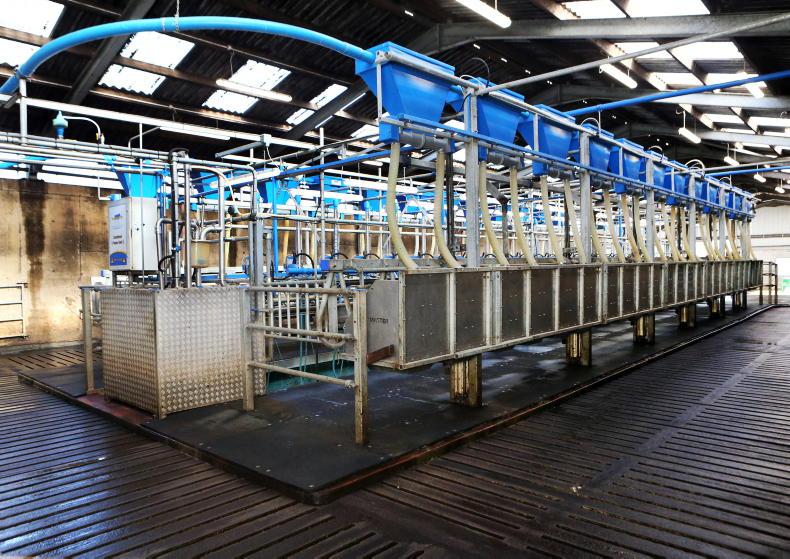
The parlour is well laid out with a large slatted collecting yard below a roof which is able to hold the entire herd at once.
The setup has been designed so that one person is able to milk by themselves while another person can bed cubicles and feed cows.
The parlour has plenty of natural lighting and is well ventilated, with a mechanical fan installed above the pit.
However, of all technology in the yard, Matthew maintained that one of the most useful pieces of kit is the automatic drafting gate.
He said it allows cows to be drafted out and ready for serving or scanning after milking so it is less time consuming for him and is stress-free for the cows.
The milking herd was still out at grass during the day when the Ulster Grassland Society visited Workman Farms Ltd on Tuesday.
Cows calve all year round and annual yield is currently sitting at 9,361 litres from 3,041kg of concentrate. It equates to a feed rate of 0.32kg/litre and 2,603 litres from forage.
There are concrete lanes throughout the 115-acre grazing block. In general cows get out to grass most years in mid-April and can stay out by day until early October.
Matthew said 2026 has proved another favourable autumn for grazing, although the herd is likely to be housed for winter at some point this week.
He starts pre mowing after the first grazing rotation in the spring and strip grazes for most of the summer. At this time of year, cows get access to full fields to help keep them settled.
In terms of silage, the Workmans mainly operate a three-cut system. Harvesting generally takes place in mid-May, late June and early August, plus a smaller area of fourth cut was baled this year in late September.
The herd is fed concentrates in the parlour and through a total mixed ration. The entire herd is managed as one group throughout the year, regardless of lactation stage or pregnancy diagnosis.
At present, cows are on maintenance plus eight litres, with heifers on maintenance plus five litres. Cows are fed to a base yield of 30 litres for 100 days (25 litres for heifers), then topped up at 0.45kg per litre.
Breeding
With breeding policy, there is a big emphasis put on butterfat and protein. Feet and leg traits, maintaining fertility and improving longevity are also key breeding priorities.
Matthew said these genetics are having an effect on herd performance, with milk components improving over recent years to current levels of 4.50% butterfat and 3.40% protein.
Sexed semen is used on heifers and selected cows are also artificially inseminated, with an Aberdeen Angus bull used to sweep up. Pre-breeding scanning takes place on all cows after 21 days in milk.
Sires currently used on the farm include Alabama, Brummel, Der Tank, Supernova, Apollo and Phoenix.
Breeding of heifers starts at 13.5 months and average age of first calving is currently 23 months.
In the milking herd, current conception rate is 40%, calving interval is 375 days and replacement rate is 25%.
Calves on the Workman farm are reared in hutches for the first two weeks, before moving to group housing and an automatic feeder.
Milk replacer is mixed at 185g/litre, calves are fed up to eight litres per day and weaning takes place at 70 days.
Calves are vaccinated for IBR and BVD when they are disbudded, plus all youngstock are vaccinated for pneumonia in November. After the automatic feeder, calves move to group pens in polytunnels to six months of age. There are now three of these low-cost houses on the farm which measure 90ft by 30ft.
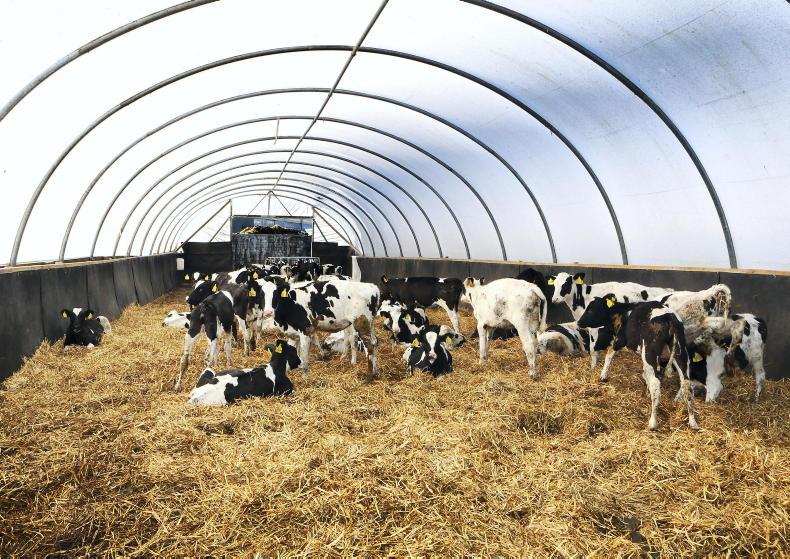
Matthew said he initially got a used polytunnel from a vegetable grower when he was closed up with TB to give him extra shed space.
The frames were reinforced to protect against wind damage and calves are given access to an outside pen for feeding.
Bedding
The first polytunnel that he erected is straw bedded and the second one has calf cubicles.
The third tunnel has just been constructed and is being fitted with cubicles at present.
Matthew pointed out that with new polytunnels, the plastic covers come with an eight-year guarantee and he has had no issues with maintenance.
As part of the M&S milk supply contract, Matthew and Helen Workman cannot feed soya or palm kernel to cows.
Aaron Jones from Chestnutt Animal Feeds explained that NovaPass-R is the main source of protein in dairy rations on the farm.
NovaPass-R is made from rape-based protein but it is 10% more energy dense than standard rapemeal. Like soya, it is a protected bypass protein so it is not broken down in the rumen.
“It is ideal for balancing forages which are high in rumen degradable protein. It also has a more attractive amino acid profile than soya because it has higher methionine content,” Jones explained.
He said the Workmans have been using NovaPass-R for the past four years and have seen no adverse impact on milk yield, quality or fertility.
Nutritionally Improved Straw pellets are also fed on the farm. This is alkali treated straw which improves digestion by 40% and has double the energy content of standard straw.
Dietary fibre
Jones said a key benefit is that the pellets allow dietary fibre content to increase in cows without displacing silage intakes.
An important piece of advice from Jones to UGS members on the day was to get 2026 silages analysed early on to properly inform winter feeding plans.
He said Chestnutt’s are seeing a “massive range” in the quality of silage samples so far in 2026, especially among first cuts.
“Dry matter intake will be a challenge for many farmers this year,” Jones said.




SHARING OPTIONS