



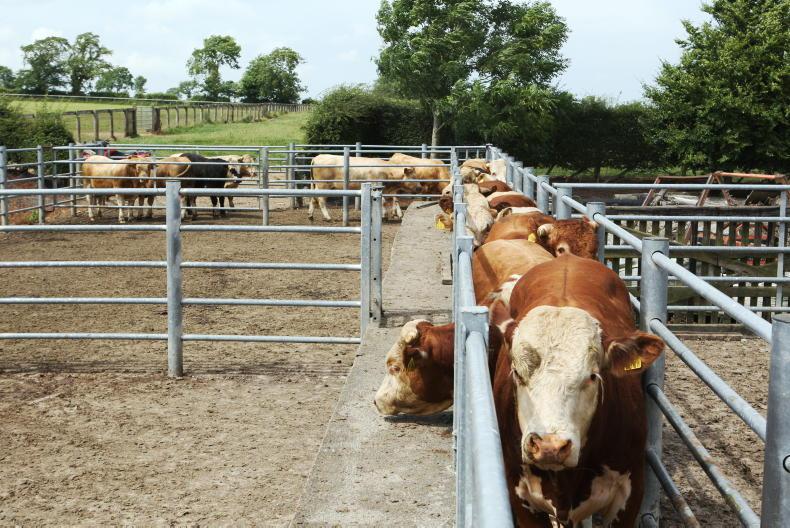
Animal Health Ireland (AHI) is urging all farmers to review their biosecurity plan as autumn sales begin to ramp up.
Programme manager at AHI Liam Doyle says that implementing robust biosecurity plans can help to keep significant diseases and their effects outside the farm gate.
He says that a few minutes of care when new animals arrive on the farm can save a serious setback, as every purchased animal is a potential entry route for disease.
"Biosecurity essentially means locking disease out of your farm, making decisions that will limit the risk of a disease entering the farm. There never is a zero risk, but you can reduce it.
"The autumn is a crucial time for farmers buying and selling stock, especially beef animals. Trade is a vital part of the Irish livestock industry, but when you purchase animals, you can take steps to protect your investment.
"For example, before a farmer buys an animal, it's advisable to ask for the animal's BVD status and, where relevant, its herd's recent history.
"Other diseases, including pneumonia and IBR, can all move on to a farm through bought-in stock, so knowing the vaccination history of the animals is very important."
New arrivals
Key advice when new animals arrive on farm is to isolate these and always avoid joining them straight with your own stock.
“Keep them physically separate, ideally with no nose-to-nose contact across a shared boundary, for at least three weeks. This gives you time to observe them for any signs of illness and protects the herd you have worked hard to keep healthy.
"Also, before purchasing cattle this autumn it is a good idea to have a chat with your vet so that you can have the optimal health plan in place to protect your investment.”
Liam concludes by advising farmers to keep their own boundaries stock-proof through “secure fencing, controlled access and keeping equipment like trailers, boots, etc, clean and disinfected”.
This, he says, will reduce the chance of disease moving on to or around your farm.
“Good biosecurity is not about one big action. It is the sum of many small, consistent habits.
"If we can step up efforts around bringing in animals, washing and disinfecting equipment and limiting contact with neighbouring herds, then we can protect herds and help support profitable farms into the future."



SHARING OPTIONS